Here’s What I Learned Working on the Velvet Skincare Brand Identity

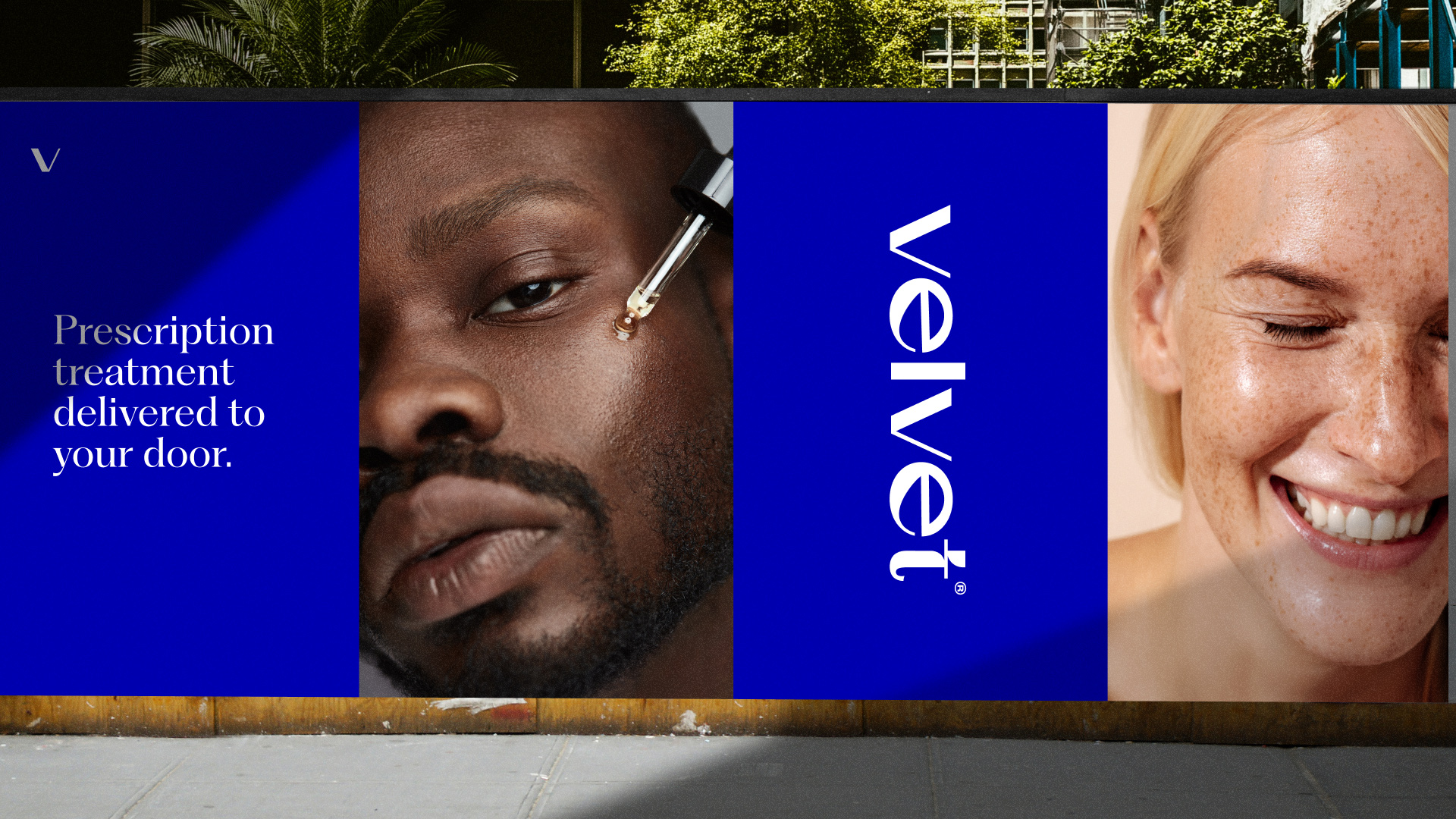
Velvet is a custom skincare solutions company built around a simple but ambitious idea: personalized skincare, delivered directly to the customer through an interactive, forum-style experience on their website. That personalization needed to come through visually too, not just functionally.
The challenge
Most skincare brands lean into a familiar visual language: soft pastels, clean minimalism, calm and clinical. That works for a lot of brands, but Velvet wasn’t trying to be calm and clinical. It was trying to be personal, unconventional, and a little bold, since the whole product is about breaking away from one-size-fits-all beauty. The identity needed to reflect that same energy, individuality over sameness.
The approach
The logotype became the anchor for the whole system. I gave it a wide, unconventional typography style specifically to feel fresh and a little offbeat, a visual signal that Velvet wasn’t playing by typical beauty-industry rules.
For color, I moved away from the expected soft, muted palette entirely and built the identity around a brilliant blue, layered with gradients of tan and purple. That combination gave the brand a dynamic, layered feel, meant to mirror how varied and individual real skincare journeys actually are. Photography followed the same instinct: diverse, playful, and editorial, rather than the polished, uniform beauty shots most skincare brands default to. Supporting typography stayed in clean sans-serifs, keeping the system feeling modern and easy to navigate even while the color and photography took bigger risks.
What I learned
Velvet reinforced something worth remembering anytime a client’s product is genuinely different: the identity has to take a risk too. If Velvet’s whole value proposition is breaking away from generic, one-size-fits-all beauty, a safe, expected color palette would have quietly undercut that message before a customer ever read a word of copy. The visual identity and the actual product experience need to be telling the same story.
If your product or service is built around individuality, it’s worth asking honestly: does the brand look as different as the thing you’re actually offering, or does it default to what everyone else in the category already looks like?